India’s Hydrogen Rail Revolution: A New Era of Green Transit
India’s Hydrogen Rail Revolution: A New Era of Green Transit
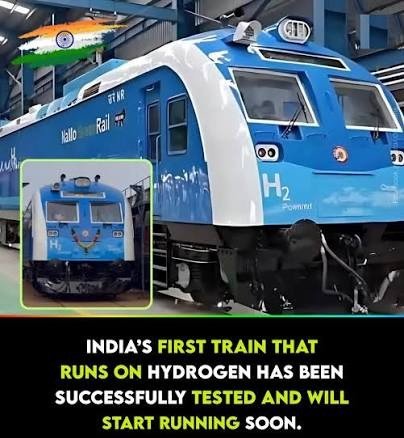
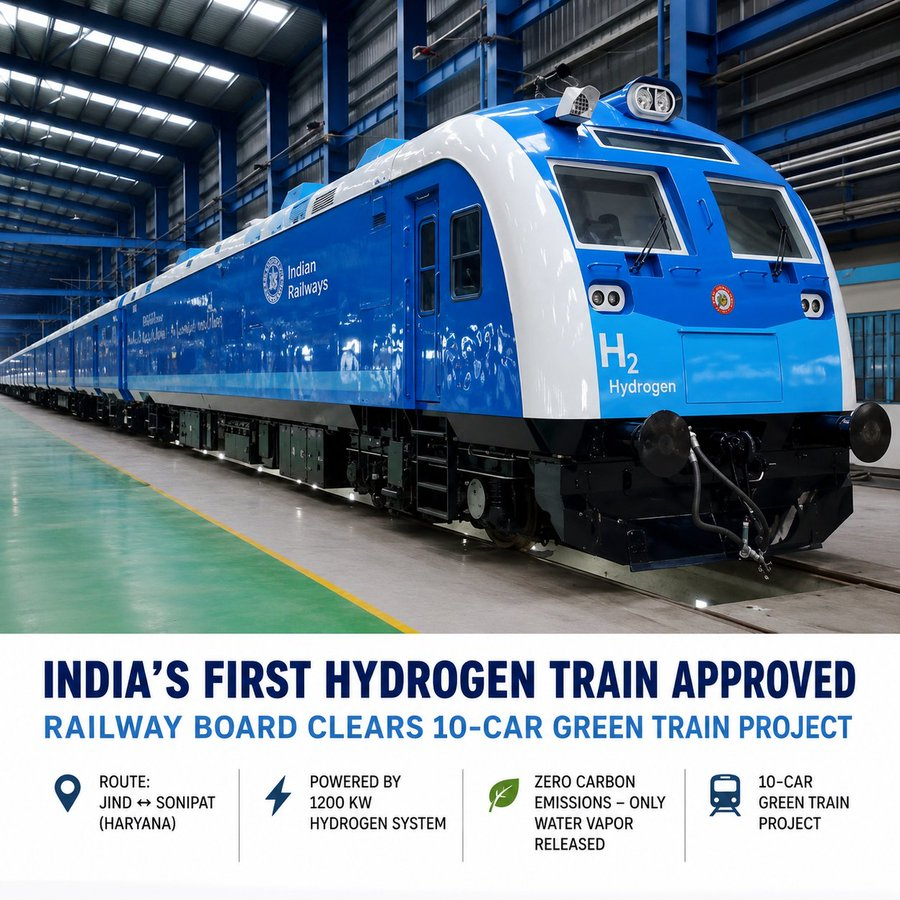
Indian Railways has officially entered a new era of sustainable transportation with the inauguration of the country’s first indigenous hydrogen-powered train on July 17, 2026. Operating on the Jind-Sonipat section of the Northern Railway, this groundbreaking pilot project marks a monumental step away from diesel traction toward zero-emission, onboard electricity generation.
By launching this initiative, India joins an elite global cohort of nations—including Germany, Japan, China, and the United States—pioneering hydrogen rail technology. Designed to provide vital operational data for future scaling, this project perfectly embodies the spirit of Atmanirbhar Bharat (Self-Reliant India).
Technical Specifications & Key Features
Developed from concept to prototype by the Research, Design & Standards Organisation (RDSO), this indigenous trainset is built for high-capacity, clean transit.
- Configuration: 10-car trainset featuring 2 Hydrogen Driving Power Cars (DPCs) and 8 Trailer Coaches (TCs).
- Propulsion System: Powered by a robust 1200 kW hydrogen fuel cell system combined with Lithium Iron Phosphate (LFP) batteries.
- Speed Profile: Approved for a maximum operating speed of 75 kmph (with a design potential of 110 kmph).
- Passenger Capacity: Accommodates approximately 2,600 passengers.
- Route Details: Connects Jind Junction, Gohana Junction, and Sonipat, serving 12 intermediate stations including Jind City, Pandu Pindara Junction, Lalit Khera Halt, Bhambhewa, Isapur Kheri Halt, Butane Halt, Khandrai Halt, Rabrah Halt, Lath Halt, Mohana, Barwasni Halt, and Sonipat New.
World-Class Hydrogen Infrastructure
To support daily operations, the country’s largest railway hydrogen storage and refueling ecosystem has been established at Jind, Haryana.
| Feature | Details |
| Storage Capacity | Holds nearly 3,000 kg of compressed hydrogen gas simultaneously. |
| Safety Licensing | Officially licensed for storage and dispensing by the Petroleum and Explosives Safety Organisation (PESO). |
| Global Standards | Designed in strict compliance with NFPA-2 and ISO 19880 Series safety benchmarks. |
| Third-Party Validation | Audited and certified via an independent safety assessment by TÜV SÜD, Germany. |
Operational Redundancy: To guarantee uninterrupted service, each DPC houses its own fuel cells and hydrogen cylinders. Furthermore, the refueling facility is equipped with a high-capacity compression system, dedicated technical support, critical spares, and a standby compressor to eliminate refuelling downtime.
This landmark project successfully combines advanced propulsion with a secure, highly regulated infrastructure, demonstrating the absolute feasibility of eco-friendly, energy-efficient rail transport in India.
Technical Specifications & Capacity:
The train is configured with 2 driving power cars (generating a combined 2,400 kW / 3,200 hp) and 8 coaches. It accommodates 682 seated passengers, with a total ridership capacity of 2,600.
Operational Blueprint:
Deployed on the Jind–Sonipat sector, the fleet will log 356 km daily via two 89 km round trips. It will operate at a service speed of 75 km/h, though its architecture supports speeds up to 110 km/h.
Sustainability Metrics:
Equipped with eco-friendly fuel cell technology, the train relies on compressed hydrogen (440 kg capacity) and emits only water vapor. Daily consumption is projected at 300 kg under peak operating loads.
Safety & Compliance:
The vessel has passed extensive 2.5-month trials (75–120 km/h) and has been vetted by an independent international certification agency. Per regulatory mandates, the hydrogen grid will be systematically shut down during dead-haul transit to the Shakurbasti maintenance yard via diesel locomotives.