A new study has found that the world’s wealthiest 10% are responsible for consuming a disproportionately large share of Earth’s natural resources, significantly contributing to environmental degradation and climate change. The findings highlight the growing impact of wealth inequality on the planet’s ecosystems and underscore the need for more sustainable consumption patterns.
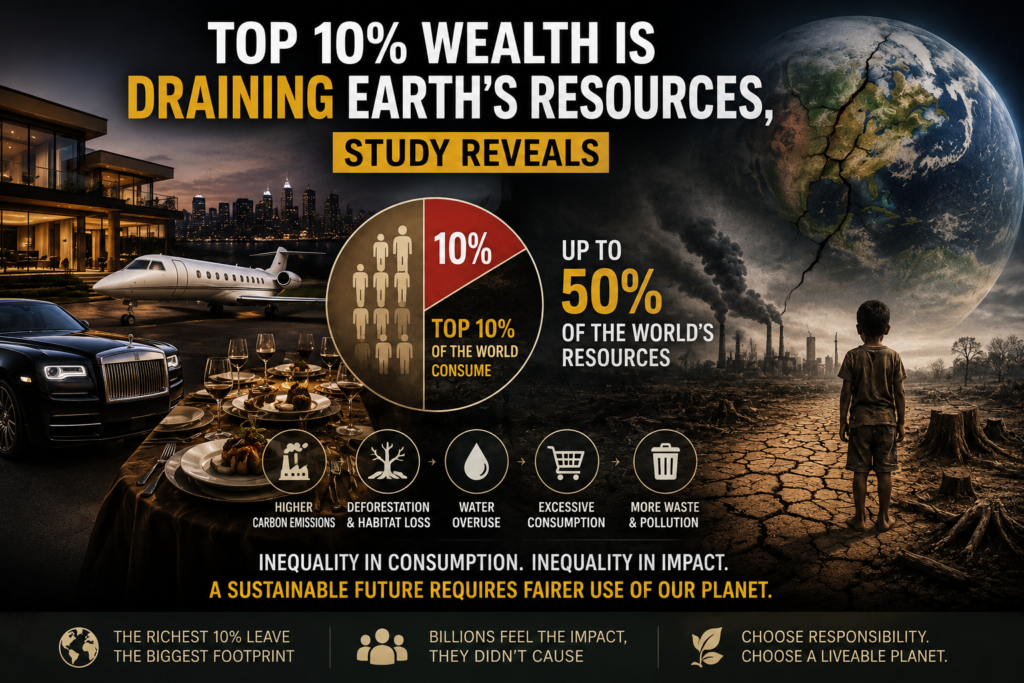
According to the researchers, high-income households consume far more energy, food, water, land, and raw materials than the global average. Luxury lifestyles, frequent air travel, larger homes, multiple vehicles, and higher demand for consumer goods all contribute to a much larger environmental footprint compared to lower-income populations.
The study warns that the concentration of resource use among the richest segment of society is placing immense pressure on forests, freshwater supplies, biodiversity, and the global climate. While billions of people continue to struggle with limited access to essential resources, the highest earners account for a significant share of carbon emissions and material consumption.
Researchers say that excessive consumption by affluent households accelerates deforestation, habitat destruction, pollution, and greenhouse gas emissions. These activities not only threaten wildlife and ecosystems but also intensify extreme weather events, rising temperatures, and water shortages affecting communities around the world.
The report argues that tackling environmental challenges requires addressing both technological innovation and consumption patterns. Policies promoting energy efficiency, sustainable transport, responsible production, and reduced waste can help lower the environmental impact of high-income lifestyles without compromising quality of life.
Experts also emphasize the importance of investing in renewable energy, circular economy practices, and resource-efficient infrastructure. Encouraging responsible consumption, reducing food waste, and supporting eco-friendly products can further reduce pressure on the planet’s limited resources.
The findings add to growing evidence that climate action must consider inequality alongside emissions. While every individual can contribute through sustainable choices, the study suggests that meaningful environmental progress will require greater accountability from the world’s highest consumers and stronger policies that encourage equitable and sustainable resource use.
As governments prepare new climate and sustainability strategies, the researchers hope the findings will encourage policymakers to focus not only on reducing emissions but also on promoting fairer and more efficient use of Earth’s finite resources for future generations.